More Than Numbers: How Health Data Helped My Family Stay in Sync
Living with constant misunderstandings about who needed what—meds, checkups, peace and quiet—used to stress us all out. I thought we were just a busy family juggling too much. But when I started paying attention to our health patterns through simple tracking tools, everything shifted. It wasn’t about fixing one person—it was about helping *all* of us understand each other better. This small change didn’t just bring clarity—it brought calm. What began as a personal curiosity turned into something deeper: a shared language that helped us see each other more clearly, respond with more kindness, and move through our days with less friction. And honestly? I wish I’d started sooner.
The Chaos No One Talks About: When Family Life Feels Out of Sync
Have you ever stood in your kitchen at 7:15 a.m., coffee half-spilled, voice rising as you ask—again—for the third time if someone took their medicine? The backpacks are flying, the dog is barking, and your youngest is crying because their favorite shirt is in the laundry. Meanwhile, your teenager is glued to their phone, ignoring the morning routine completely. You feel like a referee, a nurse, a scheduler, and a short-order cook—all before the school bus arrives. And yet, no one feels seen.
This was our normal. We weren’t dysfunctional—we were just out of rhythm. Everyone was doing their best, but we were all running on different clocks, with different needs, and zero shared awareness. My son would get cranky by midday, and I’d assume he was just being dramatic. My daughter would miss her asthma inhaler, not out of defiance, but because no one remembered to remind her. I’d snap at my partner over something small, only to realize later I hadn’t slept well and my patience was shot. We weren’t angry with each other—we were just tired, overwhelmed, and misaligned.
What I didn’t realize then was that this chaos wasn’t just about being busy. It was about a lack of insight. We were making decisions based on assumptions, not information. And in that gap—between what we thought was happening and what was actually happening—frustration grew. The truth is, health doesn’t live in a vacuum. It’s not just about one person’s choices. It’s woven into the way we interact, communicate, and support one another. When one of us is off, it affects everyone. But without a way to see it clearly, we kept blaming, guessing, and reacting—never understanding.
Seeing the Hidden Patterns: How Simple Tracking Changed Everything
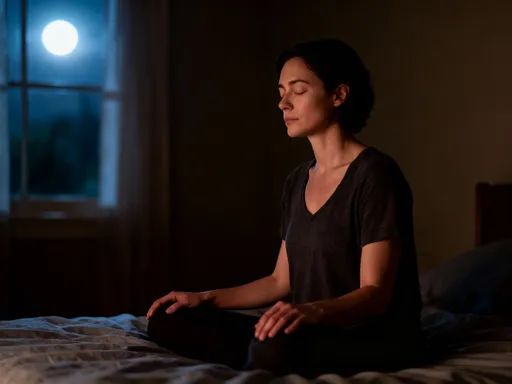
The shift started quietly. My doctor suggested I track my sleep and activity for a week to better understand my energy levels. I downloaded a basic app—nothing fancy, just something that synced with my phone and gave me a daily summary. I wasn’t trying to change my life. I just wanted to answer a simple question: Why did I feel so drained by Wednesday?
But when I looked at the data after a few days, something surprising happened. My low-energy days lined up almost perfectly with nights when I slept less than six hours. That part wasn’t shocking. What *was* surprising was seeing how those same nights affected my kids. On mornings after my poor sleep, my daughter had more meltdowns. My son was slower to get ready, more forgetful. It wasn’t because I was a worse parent—it was because our rhythms were connected in ways I hadn’t noticed.
That’s when I realized: maybe this wasn’t just about me. What if we all started tracking a few key things—not to be perfect, but to be aware? I introduced the idea gently. No pressure, no rules. Just, “What if we all tried noticing how we feel each day? Maybe it’ll help us understand each other better.” My teenager rolled their eyes, of course. But they agreed to try it—for a week.
And then came the moment that changed everything. My daughter, who often seemed moody in the afternoons, looked at her sleep chart and said, “Oh. I only slept five hours last night. No wonder I cried over my math homework.” It wasn’t an excuse. It was an explanation. And in that moment, something softened. I didn’t scold her. I didn’t tell her to toughen up. I just said, “Yeah, that would make anyone feel off.” She looked at me like I finally *got* it. That’s when I realized data wasn’t cold or clinical—it could be compassionate. It wasn’t about judgment. It was about clarity. And clarity, it turns out, makes room for kindness.
From Conflict to Compassion: Building Empathy with Shared Insights
Before we started tracking, our arguments followed the same script. “Why are you yelling?” “Why are you ignoring me?” “You never listen!” It felt personal. But once we could see patterns—sleep dips, stress spikes, energy crashes—those same moments started to feel different. Instead of taking things personally, we began to wonder: *What’s underneath this?*
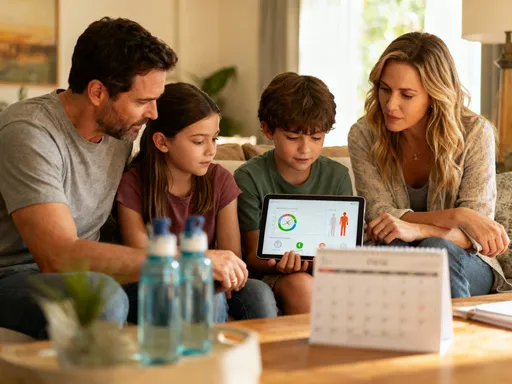
One evening, my son snapped at his sister over a borrowed hoodie. In the past, I would’ve jumped in, lecturing about respect and sharing. But that night, I glanced at the family dashboard we’d set up (just a shared screen on the fridge, nothing high-tech) and noticed he’d had three nights of poor sleep. So instead of reprimanding him, I said, “You’ve been really tired this week. Is that making it harder to handle small stuff?” He paused. Then, quietly: “Yeah. I didn’t even realize how wiped I was.”
That small exchange changed the tone of the whole night. We didn’t sweep the behavior under the rug—but we addressed it with empathy, not authority. And over time, this became our new normal. My teenager started saying things like, “I’m low on energy today—can we talk later?” instead of shutting down completely. My partner began recognizing his own stress patterns and would say, “I need 20 minutes of quiet before I can help with dinner.” We weren’t avoiding conflict—we were navigating it with more self-awareness and care.
The real gift was how it shifted our emotional climate. There’s a difference between a home that’s busy and one that feels tense. Ours used to feel tense—like we were all one bad day away from a breakdown. But as we learned to read each other’s signals—not just through words, but through patterns—we became a safer space. Kids knew they wouldn’t be punished for being tired. Parents knew they wouldn’t be seen as lazy for needing rest. We were learning, slowly, that being human doesn’t mean failing—it means fluctuating. And that’s okay.
Making It Work for Real Life: Tools That Fit, Not Fight, Your Routine
I’ll be honest—I was worried this would turn into another chore. Another thing to manage. Another screen to check. But the key, I learned, was simplicity. We didn’t track everything. We didn’t aim for perfection. We picked two things: sleep and mood. That’s it. Each night, we spent about two minutes logging how we felt and how well we slept. Some used apps. Some wrote it in a notebook. The method didn’t matter—consistency did.
We also used gentle reminders. Not alarms that startled us, but soft notifications: “Time to stretch,” “Don’t forget your water,” “How are you feeling today?” These weren’t commands—they were nudges. And because they came from tools we trusted, not from someone nagging, they felt supportive, not controlling.
One of the most helpful tools was a shared calendar. We added doctor appointments, therapy sessions, even “quiet evenings” when someone needed downtime. It wasn’t about scheduling every minute—it was about visibility. When my daughter saw that her brother had a big test the next day, she didn’t fight him for the living room. She said, “You need to study, don’t you? I’ll go to my room.” That kind of awareness didn’t come from discipline. It came from information.
And yes, we talked about privacy—especially with our teenager. We made it clear: this wasn’t about surveillance. It was about support. They could choose what to share. They could skip a day. They could use a private journal instead of an app. Consent was non-negotiable. But here’s the surprise: the more control they had, the more they participated. When they felt trusted, they opened up. One day, my teen said, “Can I show you my sleep chart? I think I need to go to bed earlier.” That never would’ve happened if we’d forced it.
When Kids Take Charge: Encouraging Independence Through Awareness
One of the most beautiful shifts was watching my kids grow into their own health awareness. It wasn’t me telling them to go to bed earlier—it was them *choosing* to, because they saw the proof. My son noticed that on nights he slept eight hours, he did better in soccer practice. My daughter linked her late-night scrolling to morning headaches and started putting her phone away an hour earlier—on her own.
That’s the power of data: it removes the power struggle. Instead of me saying, “You’re too tired because you stayed up late,” they could see it for themselves. And when kids discover something on their own, it sticks. I stopped being the enforcer and started being the guide. “Want to see how your energy’s been this week?” became more effective than “You need to get more sleep.”
We also introduced small challenges—fun ones. A family step count competition. A “hydration week” where we all tracked water intake. Nothing serious, just ways to make awareness playful. My youngest loved giving out “awards” at dinner: “Most Steps Today: Dad! Best Sleep Streak: Me!” It turned healthy habits into something we celebrated, not scolded about.
The goal wasn’t to raise perfect children. It was to raise aware ones. Kids who understand that their choices affect how they feel. That tiredness isn’t a character flaw—it’s a signal. That asking for space isn’t selfish—it’s smart. These aren’t lessons you can teach in a lecture. They’re learned through experience, reflection, and a little bit of data to light the way.
Strengthening the Whole Family’s Resilience
Over time, something deeper took root: a culture of care. We started having weekly check-ins—not long meetings, just 10 minutes after dinner. We’d look at our summaries together. “How was your energy this week?” “Anything feel harder than usual?” “Who needs a little extra support?” It became normal to say, “I’m not doing great,” without fear of judgment.
And here’s what surprised me most: I stopped feeling guilty about taking care of myself. For years, I thought self-care was selfish—something I could only do when everything else was perfect. But when I saw the data—how my better sleep led to more patience, how my daily walk improved my mood—I realized: taking care of me wasn’t a luxury. It was a gift to all of us. When I’m rested, I’m present. When I’m calm, the house is calmer. That’s not vanity. That’s responsibility.
Our home didn’t become perfect. We still have messy mornings and off days. But the baseline shifted. The overall tone is softer. We recover faster from setbacks. We apologize more easily. We listen more deeply. And we’ve learned to say, “I’m not okay today,” without shame—because we know it’s temporary, and we know we’re not alone.
Resilience isn’t about never falling apart. It’s about how quickly you come back together. And for us, health data became the thread that helped us reconnect, again and again.
A Smarter, Softer Way to Live Together
Looking back, I realize we weren’t just tracking sleep or steps. We were learning a new way to love each other—with more patience, more understanding, more grace. The numbers didn’t change who we were. They helped us see who we already were, more clearly.
This journey wasn’t about optimization or performance. It wasn’t about hitting goals or winning challenges. It was about connection. It was about replacing assumptions with awareness, blame with curiosity, and frustration with compassion. It was about realizing that health isn’t just a personal project—it’s a family one.
And the beautiful part? You don’t need fancy tools or hours of analysis. You just need a little curiosity, a few minutes a day, and a willingness to see each other more fully. You don’t have to be tech-savvy. You don’t have to be perfect. You just have to care—and want to do it a little better.
Today, our home still buzzes with activity. The bus still comes early. The laundry still piles up. But something fundamental has changed. We’re not just sharing a house. We’re sharing a rhythm. We’re in sync—not because we’re the same, but because we’re paying attention.
We’re not perfect. But we’re more present. And that makes all the difference.