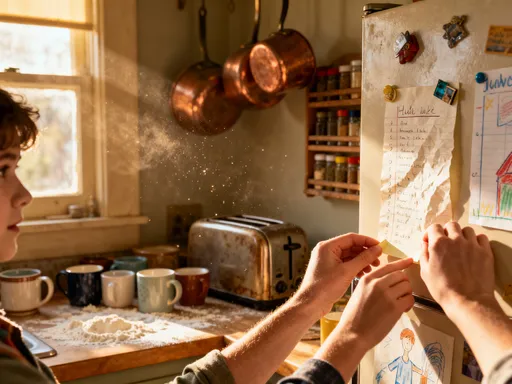
From Chaos to Calm: How Family To-Do Lists Keep What Matters Most Safe
Life at home often feels like a whirlwind—school runs, grocery lists, doctor appointments, and endless reminders floating in the air. You forget nothing, yet everything feels just out of reach. What if a simple tool could gather those loose threads and turn them into something steady, something safe? I’ve been there, and what changed everything wasn’t a grand solution, but a shared list that grew into a quiet keeper of our family’s most important things. It didn’t just help us remember—it helped us care, connect, and breathe again.
The Messy Reality of Family Life (and Why We Need More Than Sticky Notes)
Picture this: it’s 7:15 a.m., and the kitchen is already a battlefield. One child can’t find their library book, the other forgot about the school picture day and is wearing mismatched socks. Your phone buzzes—your partner is stuck in traffic and needs you to pick up the prescription. Meanwhile, the dog hasn’t been fed, and you’re not even sure if you packed your youngest’s allergy-safe snack for the field trip. Sound familiar? This isn’t just busy—it’s chaos with consequences. And behind every missed deadline, every forgotten permission slip, is a deeper fear: that we’re failing the people we love most.
For years, I tried to manage it all with sticky notes, a paper planner, and my ever-failing memory. I’d write things down, only to lose the list in a pile of mail or leave it on the fridge when I ran out the door. I felt like I was always chasing something, always apologizing. The guilt wasn’t about the mess—it was about the moments I missed because I was too overwhelmed to be present. I’d promised my daughter I’d watch her school play, but I mixed up the date. I forgot to call my mom on her birthday because I was too busy signing forms for the science fair. These weren’t small things. They were promises, and they mattered.
Here’s what I finally realized: disorganization isn’t just inconvenient—it’s emotionally costly. It erodes trust, creates tension, and steals our peace. When we’re constantly worried about forgetting something important, we can’t fully relax or truly enjoy the time we have with our families. We’re not just managing tasks—we’re trying to protect our relationships, our routines, and our sense of safety. That’s why we need more than sticky notes. We need a system that doesn’t just track chores but holds our care, our love, and our attention in a way that’s reliable, visible, and shared.
Not Just Tasks—A Digital Keepsake of Family Care
It sounds strange at first, I know—how can a to-do list feel like love? But think about it: when you add “Call Grandma” to the list and your child checks it off, that’s not just a completed task. That’s a moment of connection. That’s someone remembering someone else. That’s care in action. I started seeing our family list not as a chore chart, but as a living record of how we look out for each other. It’s where I write “Pack raincoat—forecast says storms” for my son, and where he later adds “Mom’s favorite tea in cabinet” after I’ve been sick. These aren’t cold checkmarks. They’re quiet acts of protection.
One evening, I found my daughter reading through the list from the past week. She smiled and said, “Look, Dad walked the dog every day even when he was tired.” That hit me right in the heart. She wasn’t just seeing tasks—she was seeing effort. She was seeing love in the small things. That’s the magic of a shared digital list: it makes the invisible visible. It shows the work that usually goes unnoticed—the lunch packed, the permission slip signed, the vet appointment scheduled. It becomes proof that someone was paying attention.
And here’s the thing—when we treat the list this way, it changes how we relate to it. It’s not a nagging reminder of what’s left to do. It’s a record of what’s already been done. It’s a timeline of care. I’ve gone back and read old entries before—a note that said “Bake cookies for class party” brings back the memory of my daughter helping me stir the batter, flour on her nose, laughing. It’s not just a task; it’s a moment preserved. In a world that moves so fast, that kind of emotional anchoring is priceless. The list becomes more than functional. It becomes meaningful.
How the Right Tools Turn Chaos into Connection
Now, not all tools are created equal. I’ve tried apps that were too complicated, too rigid, or just plain annoying. The key isn’t finding the most feature-packed system—it’s finding one that fits your family’s rhythm. What we needed wasn’t a corporate project manager, but something warm, simple, and flexible. We wanted something that felt like an extension of our home, not another chore.
What made the difference? First, shared access. Everyone over ten got their own login. My husband, my kids, even my mom when she helps with pickups. No more yelling across the house to ask if the dentist appointment was confirmed. We all see it, in real time. Second, gentle reminders—not loud alarms, but soft nudges. A little chime on the phone an hour before piano lessons. A notification that says “Don’t forget: soccer practice at 4:30!” in a friendly tone. No stress, just support.
Voice input was a game-changer. I can say, “Hey, add ‘buy gluten-free bread’ to the grocery list” while I’m folding laundry, and it’s done. No stopping, no typing, no forgetting. And cross-device syncing means I can start a list on my phone at the grocery store, and my partner can check it on their tablet while cooking dinner. It’s seamless. One night, I was running late picking up my daughter from dance class. I quickly sent a message through the app: “Running 10 mins late—will be there by 7:10.” She saw it, showed it to her teacher, and didn’t worry. That small moment of reassurance? That’s connection.
And yes, we’ve had hiccups. My son once marked “Homework done” before actually finishing it. But instead of a lecture, we used it as a chance to talk. “Let’s make sure the list stays honest, okay? It helps us trust each other.” That’s the beauty of it—when the tool is shared, the conversation becomes part of the process. It’s not about perfection. It’s about staying in sync.
Building Trust One Checked Box at a Time
Trust doesn’t happen all at once. It builds in small moments—like when your teenager logs that they cleaned their room without being asked, or when your partner marks “Gas tank full” before your road trip. These aren’t grand gestures, but they matter. They show up. And when they’re visible on a shared list, they become proof of responsibility, not just promises.
I’ll never forget the first time my daughter checked off “Feed the dog” without me reminding her. I saw the notification pop up on my phone and felt this wave of relief—not just because the dog was fed, but because I knew she was learning to care, to follow through. And when I thanked her, she smiled and said, “I saw it on the list. It’s my job.” That word—“job”—meant something. It gave her a sense of ownership. She wasn’t just doing a chore. She was contributing.
For us, the list replaced so many of the nagging conversations. Instead of “Did you do your homework?” it became “I see you haven’t checked off math yet—need help?” It’s a subtle shift, but it changes everything. It turns tension into teamwork. It removes the power struggle because the list holds the expectation, not me. I’m not the boss. I’m the teammate.
And here’s what surprised me: even when tasks are missed, trust grows. Because we talk about it. “I forgot to take out the trash—sorry,” my son said last week. “No problem,” I replied. “Just add it to tomorrow’s list.” That’s the rhythm—trying, adjusting, moving forward. The list isn’t a judge. It’s a guide. And over time, that consistency builds something deeper: mutual respect. We see each other’s efforts. We see each other’s slips. And we keep going, together.
Turning Daily Routines into Rituals of Safety
There’s a quiet power in routine. Brushing teeth, locking doors, checking the oven—these aren’t glamorous, but they keep us safe. And when we put them on the list, they become more than habits. They become promises. Small, daily vows to protect each other.
We have a “Weekend Safety Check” list that runs every Saturday morning. It includes things like “Test smoke alarms,” “Check first aid kit,” “Water the plants (yes, even the kitchen herb one).” At first, my kids groaned. “Do we have to?” But over time, it became part of our rhythm. Now, my son grabs the ladder without being asked. My daughter checks the expiration dates on bandages like a pro. It’s not just about safety—it’s about showing up for our home.
One night, the carbon monoxide detector went off. We evacuated, called the technician, and it turned out to be a false alarm. But later, my daughter said, “We were ready because we test the alarms every week.” That stuck with me. The list didn’t just help us remember—it helped us prepare. It turned a scary moment into one where we felt capable, not panicked.
And it’s not just emergencies. Packing backpacks the night before, laying out clothes, packing emergency snacks—these are small acts of care that add up. When my son was nervous about his first sleepover, I added “Pack favorite pajamas and stuffed bear” to the list. He saw it, smiled, and said, “You remembered.” That’s the thing—when we write it down, we’re saying, “I see you. I’ve got you.” The list becomes a silent guardian, watching over the little things so we can focus on the big ones.
Growing Up Together: Lists That Evolve with Your Family
Families aren’t static. Babies come. Kids grow. Parents age. And a good system grows with you. That’s what I love most about our digital list—it’s not stuck in time. It adapts. It learns. It stays with us.
When my youngest started solid foods, we added a meal planner section. I could track what she ate, note allergies, and share updates with my mom when she babysat. Later, when my oldest started middle school, we added study schedules and project deadlines. We didn’t abandon the system—we expanded it. It became a living timeline of our family’s journey.
Last year, my father had a health scare. He lives alone, but we wanted to stay connected. So we added a “Check-In with Grandpa” task every other day. One of us calls, sends a photo, or just says hello. It’s simple, but it means everything. He sees the notifications, knows we’re thinking of him. And when he checks it off from his end—“Talked to Sarah today”—it warms my heart. The list isn’t just for our home. It’s for our whole circle of care.
And now, as my oldest starts thinking about college, we’re adding new sections: scholarship deadlines, campus visit schedules, recommendation letter requests. It’s not just about getting things done. It’s about supporting her dreams. The same tool that once tracked diaper changes now helps track her future. That continuity is powerful. It tells her, “We’ve always been here. We still are.”
The Peace That Comes from Knowing Someone’s Got It
Let me tell you the best part: the quiet. The deep, steady calm that comes from knowing the details are handled. Not perfectly. Not always on time. But handled. When I sit down for dinner now, I’m not mentally scrolling through a to-do list in my head. I’m present. I’m listening. I’m laughing. Because I know the list is there, doing its quiet work.
That peace isn’t just about convenience. It’s about presence. It’s about being able to look my child in the eyes at bedtime and say, “Tell me about your day,” without wondering if I remembered to sign the field trip form. It’s about hugging my partner and knowing we’re on the same page, not racing in different directions. The list holds the weight so we don’t have to.
I used to think I needed to remember everything to be a good mom, a good wife, a good daughter. But I was wrong. The real strength isn’t in my memory—it’s in our system. It’s in the shared responsibility, the visible care, the quiet confidence that we’re looking out for each other.
So if you’re feeling overwhelmed, if you’re tired of forgetting, if you’re carrying the mental load alone—try this. Start small. Add one shared list. Put on it the things that matter. Watch what happens. You might not notice the change right away. But one day, you’ll realize: the chaos has softened. The connections have deepened. And the people you love most? They’re safer, seen, and held—by each other, and by a simple list that does more than remind. It protects.