We can’t keep arguing about the air quality: How our family finally stopped the blame game with smart purification
Living together means sharing more than just space—it means breathing the same air, literally. For months, my family kept pointing fingers whenever someone felt stuffy or sneezed too much. “Did you forget to clean again?” became a nightly ritual. Then we got smart air purifiers that didn’t just clean the air—they changed how we communicated. No more assumptions, no more guilt. Just clear air and clearer peace. This is how one small tech shift brought real harmony to our home.
The Constant Bickering Over "Who Forgot to Clean?"
It started with a cough. Then another. Someone would sniffle after dinner, and within minutes, the tone in our house would shift. "Did you run the purifier today?" my sister would ask, her voice tight. "I thought you did," I’d reply, already feeling defensive. And just like that, another round began. We weren’t just arguing about air quality—we were fighting about care, attention, and who was trying harder. It wasn’t about dust or dander, not really. It was about feeling unseen, like our efforts were invisible unless someone pointed them out.
My mom would vacuum every morning, but if the air still felt heavy by evening, she’d hear, "You must’ve missed a spot." My teenage nephew would forget to close his window after gaming, and suddenly, everyone was sneezing—"Thanks to you," my sister would mutter. These weren’t explosive fights, but low-grade tensions that never fully dissipated. They layered over time, like dust settling on furniture no one wanted to wipe. We were all trying, but no one felt appreciated. And instead of solving the problem, we kept blaming each other. The irony? We were all breathing the same air, yet none of us had the full picture.
What we didn’t realize then was that we weren’t just missing clean air—we were missing clarity. Without real data, every symptom became a mystery, and every mystery led to suspicion. Was it the new carpet? The cat? The open window? Without answers, we made them up—and usually, the answer was someone in the family "not doing their part." It was exhausting. And honestly, a little unfair. We needed a way out of the blame cycle. What we got was something much better: truth.
Introducing the First Smart Purifier – A Gimmick or a Game-Changer?
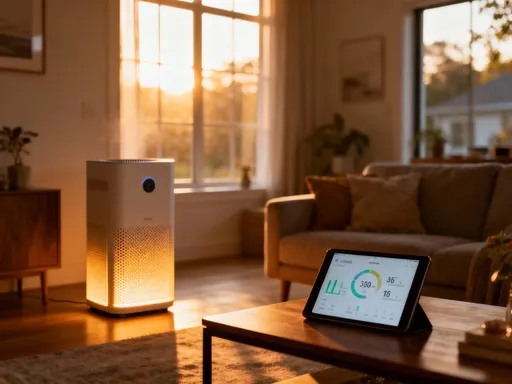
I bought the first smart purifier on a whim. I saw it in a home goods store—sleek, quiet, with a little glowing ring that changed color based on air quality. "Why not?" I thought. "It can’t hurt." I expected it to be another gadget that lived on a shelf after two weeks, joining the ranks of forgotten juicers and unused yoga mats. But this one was different. From the first day, it started talking to us—well, not literally, but close. It sent alerts to my phone: "Air quality declining in living room," "Filter replacement recommended in 14 days," "VOC levels elevated—consider ventilating."
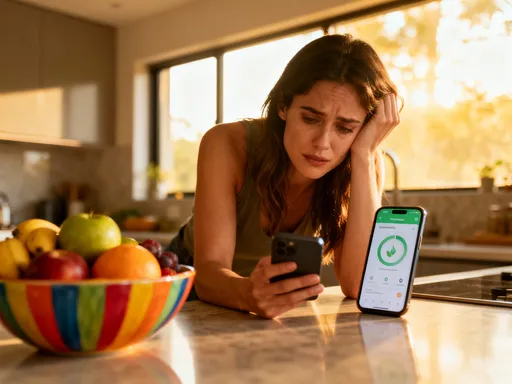
At first, we ignored it. My nephew called it "the nagging robot." My sister said, "Now even the air is judging us." But then came the night that changed everything. We’d just finished stir-frying vegetables, and within ten minutes, the app pinged: "High PM2.5 detected in kitchen." I opened it and saw a sharp red spike on the graph—right at 7:12 p.m., the exact time we were cooking. I showed everyone. "It wasn’t anyone’s fault," I said. "It’s just what happens when we cook without the hood on full." That simple moment shifted something. We weren’t dealing with laziness or neglect—we were dealing with physics. And for the first time, we had proof.
That night, we turned on the exhaust fan and ran the purifier at max. Within 30 minutes, the air quality returned to green. No yelling, no blame—just action. And it felt good. We weren’t fixing a person; we were fixing a situation. The purifier didn’t scold us. It informed us. And somehow, that made all the difference. It wasn’t about who forgot—it was about what was happening, right now. That tiny device didn’t just clean the air. It cleaned up our conversations too.
From Individual Devices to a Connected System
One purifier helped, but it wasn’t enough. The kitchen would spike, but the living room stayed clear. My mom’s bedroom had great air, but the baby’s room—where my sister’s toddler slept—was often in the yellow zone. We needed more than a single solution. So we expanded. We got units for every main room: living room, kitchen, both bedrooms, and even the hallway near the nursery. Each one connected to the same app, creating a real-time map of our home’s air.
What surprised us most was how quickly everyone started checking the app—not out of guilt, but curiosity. My 10-year-old niece loved watching the color changes. "Look! The kitchen is red again!" she’d announce, like it was a weather report. And it kind of was. We started treating air quality like the forecast: "It’s going to be a high-pollen day, better keep windows closed," or "The baby’s room is getting stuffy, maybe run the purifier before bedtime." The system didn’t just monitor air—it created a shared language.
Seeing the whole house on one screen changed how we thought about responsibility. It wasn’t "your room" or "my space" anymore. It was *our* air. When the hallway unit showed rising dust levels, no one asked "Who didn’t vacuum?"—we just did it. Together. The technology didn’t replace care; it made care easier to see and act on. And that made all the difference. We weren’t managing chores. We were protecting our shared space—calmly, clearly, and together.
How Real-Time Data Ended Assumptions and Arguments
Before the purifiers, every sneeze was a mystery. Now, every change has a timestamp. That shift—from guessing to knowing—ended so many arguments before they could even start. I remember one evening when my nephew started coughing. Old us would’ve blamed the dog, the carpet, or someone’s laundry. But this time, I checked the app. The living room was fine. His bedroom, however, was in the orange zone. "Hey," I said, showing him the screen. "Your room’s air is off. Want to check your filter?" He did. It was clogged. He replaced it. No drama. No defensiveness. Just a quick fix.
That moment was small, but it meant everything. We weren’t accusing. We weren’t assuming. We were using data as a neutral third party—like a referee in a game we didn’t even know we were playing. And it worked. When the kitchen air spiked during baking, we didn’t say, "You left the door open!" We said, "Looks like we need to run the purifier longer after baking." The focus shifted from fault to function. From blame to solution.
Even my dad, who used to roll his eyes at anything "smart," started trusting the system. "I don’t have to guess anymore," he said. "I just look at my phone." That’s the power of real-time data. It removes emotion from the equation. It doesn’t care who you are or what you did yesterday. It only tells you what’s true *now*. And in a house full of people with different habits and rhythms, that kind of objectivity is priceless. It didn’t just improve our air. It improved how we treated each other.
Coordinating Care Without Saying a Word
One of the most beautiful side effects of the system was how it enabled silent care. No more reminders, no more nagging. Just quiet, consistent action. My sister started replacing filters in the baby’s room without being asked—she saw the alert on her phone and handled it. My mom began closing windows when the outdoor pollution index rose, even if no one mentioned it. And I’d turn on the living room purifier before movie night, just because I saw the air getting drier.
It wasn’t grand gestures. It was small, daily acts of attention—made possible because we all had the same information. We didn’t need to ask, "Did you remember?" We could just check and act. And that changed the emotional weight of caregiving. It didn’t feel like a chore anymore. It felt like participation. Like we were all on the same team, watching the same scoreboard.
My nephew, who used to ignore every request, now texts me: "Your bedroom air is yellow. You might want to check it." No sarcasm. No attitude. Just care, delivered through data. It’s funny—technology brought us closer not by making us talk more, but by letting us care more quietly. We weren’t performing responsibility. We were living it, effortlessly. And that made it sustainable. Because when care doesn’t feel like a burden, people actually do it.
Teaching Kids Responsibility Through Shared Visibility
Getting the kids involved used to feel impossible. "Clean your room" turned into battles. But when we showed them the air quality dashboard, something clicked. Suddenly, clean air wasn’t an abstract rule—it was a visible goal. We made it a weekly ritual: every Sunday night, we’d gather around my phone and review the week’s air report. "Great job keeping the living room green," I’d say. "But the playroom spiked three times—any ideas why?"
They loved it. It felt like a game. My niece started closing her door after art projects to contain the glitter dust. My nephew began wiping his gaming chair after sessions to reduce fabric particles. They weren’t doing it because they were told—they were doing it because they could *see* the impact. And that made all the difference.
We even turned filter changes into a family event. The kids help unwrap the new filter, place it in the unit, and press "reset" on the app. They feel proud. And they should. They’re not just living in the home—they’re helping maintain it. The dashboard gives them ownership. It shows them that their actions matter, not just to adults, but to the air they breathe. That’s a powerful lesson—one no lecture could teach as well.
More Than Cleaner Air – A Smarter, Calmer Home
Looking back, I realize we didn’t just buy air purifiers. We bought peace. The kind that comes from knowing you’re not being judged for every little thing. The kind that grows when assumptions are replaced with facts. Our home isn’t perfect—someone still leaves windows open, and the dog still sheds. But now, we handle it differently. We see the data, we act, and we move on. No guilt. No grudges. Just care, supported by clarity.
The technology didn’t fix us. It gave us tools to fix our patterns. It helped us replace blame with collaboration, silence with quiet support, and stress with shared responsibility. And in doing so, it made our home feel safer, calmer, and more connected. We breathe easier—not just because the air is cleaner, but because we don’t have to carry the weight of unspoken expectations.
Smart tech is often sold as a way to make life easier. But for us, it did something deeper. It helped us love each other better. By removing the friction of daily misunderstandings, it made space for more patience, more kindness, and more presence. The purifiers didn’t just clean the air. They cleared the air—between us. And that’s a kind of clean that no vacuum can reach.